Diptique Orpheon
Some perfumes smell like a list of notes. Orphéon smells like a room you entered after midnight and never quite left.
Midnight in Paris jazz bar
Some perfumes smell like a list of notes. Orphéon smells like a room you entered after midnight and never quite left.
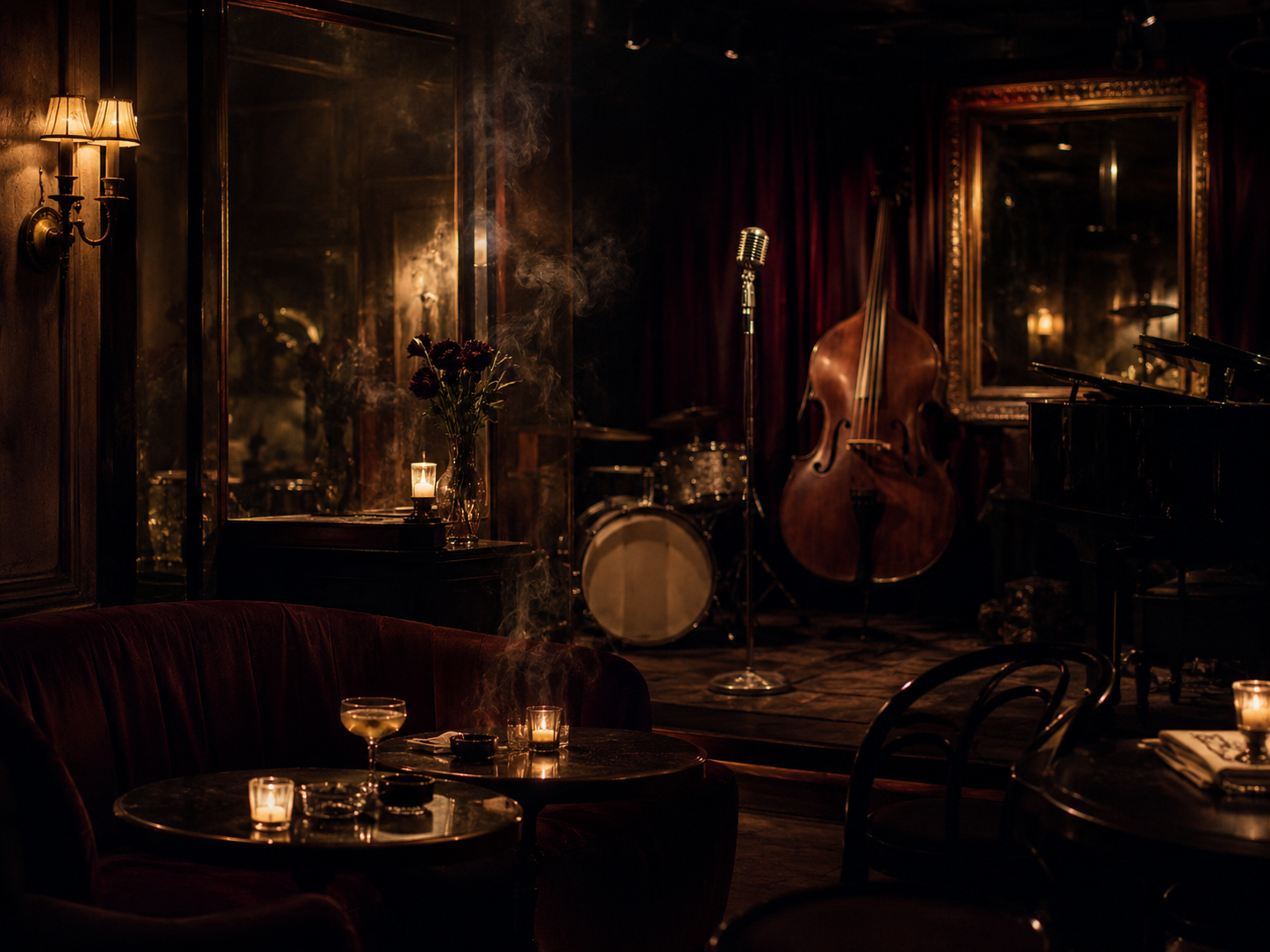
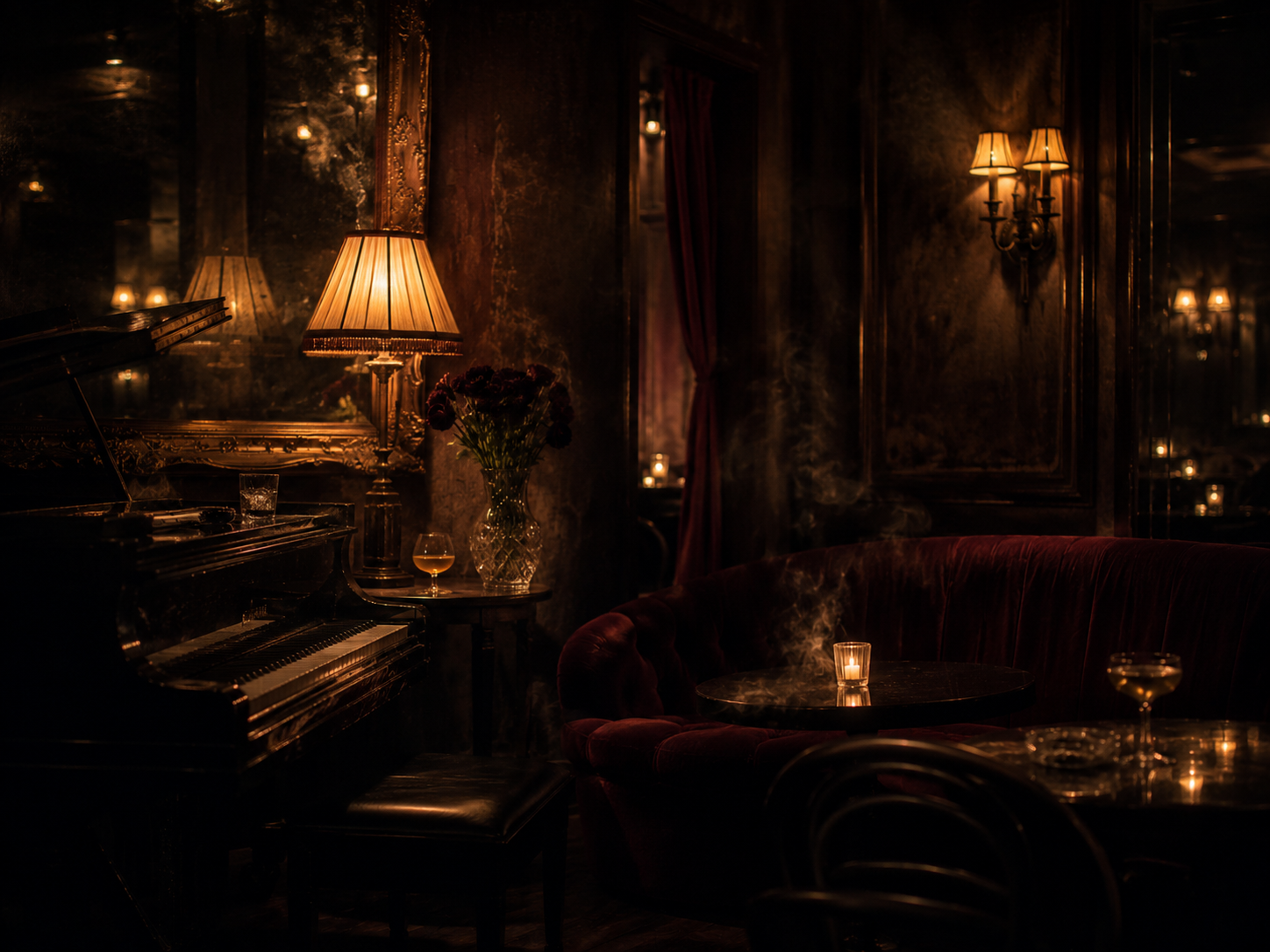
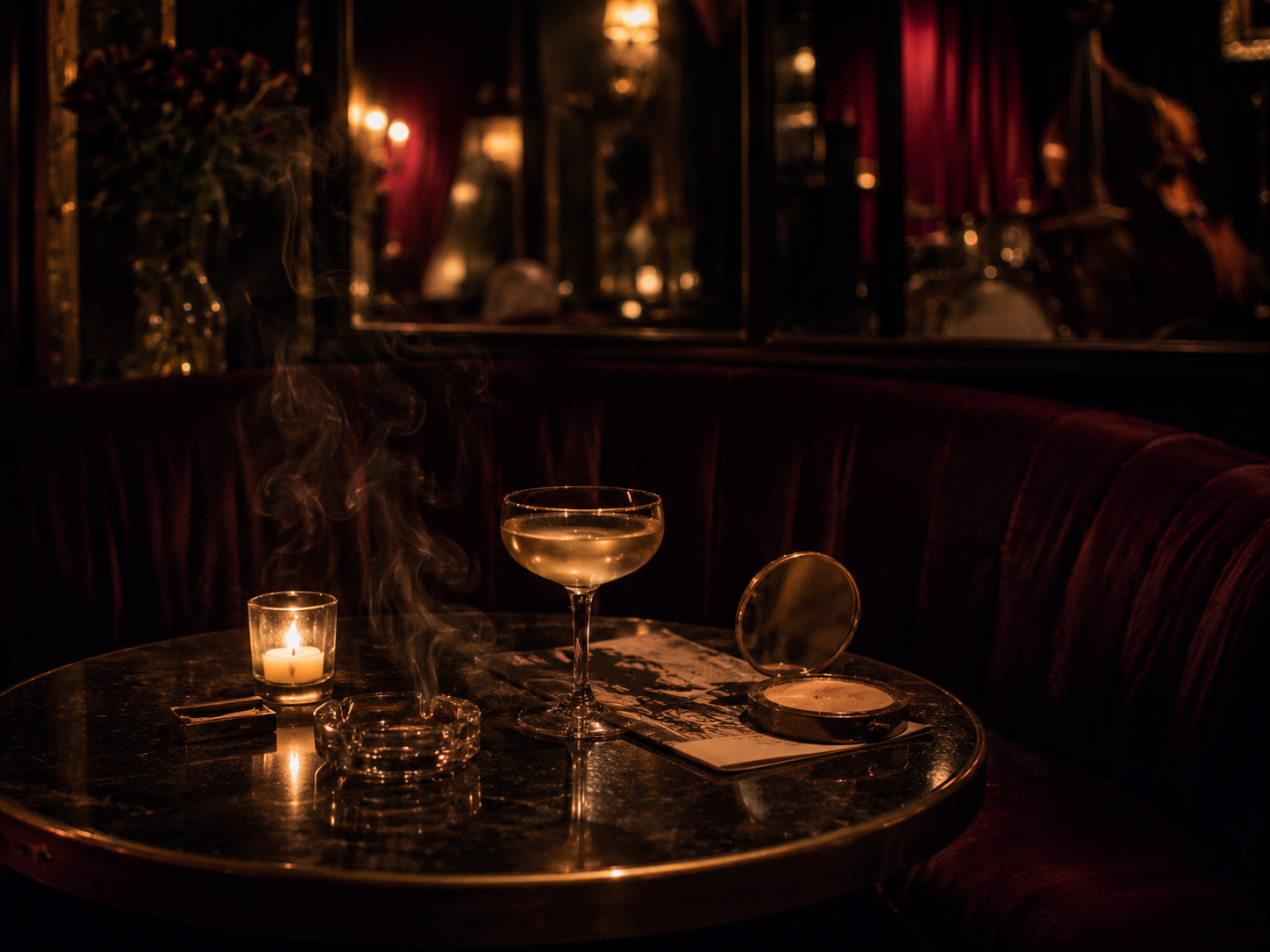
Diptyque built Orphéon around the atmosphere of a smoky Parisian jazz bar from the 1960s: polished wood, powder on skin, a cold drink, the last warmth of a crowded room.
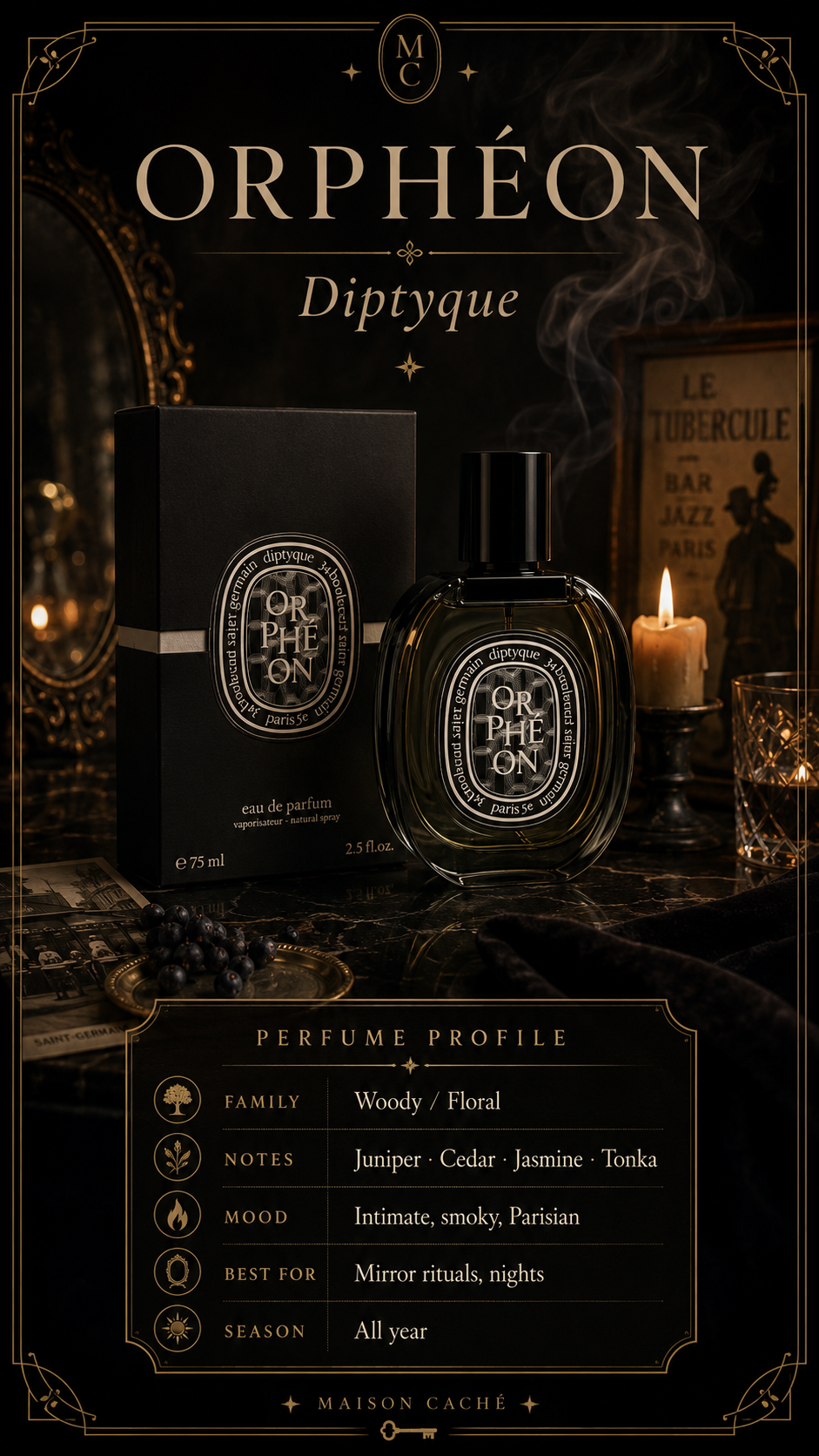
The opening has the clean, aromatic snap of juniper—almost gin-like, but never sharp for long. Cedar gives it structure: dark furniture, old walls, something dry and steady beneath the haze. Jasmine adds a soft, powdered glow, while tonka bean smooths the edges and leaves warmth close to the skin.
The result is intimate rather than loud. It does not announce itself across the room. It changes the air immediately around the person wearing it.
When it belongs
Orphéon is technically an all-year fragrance, but it is particularly beautiful in autumn and winter, when cool air gives the cedar and tonka room to deepen. It feels made for evening: dark clothes, lamplight, a mirror, nowhere urgent to be.
In warmer weather, it still works—just closer to dusk, and with a lighter hand. Think of it as a winter room that happens to have doors into every season.
Scent as a nervous-system anchor
Perfume is not medicine, and no note is universally calming. Cedar does not contain a command that tells every nervous system to relax. The more interesting truth is personal: scent is closely connected with the brain systems involved in emotion and autobiographical memory, so a fragrance can become powerful through association.
Wear the same scent while doing something slow and safe often enough, and the body may begin to recognise the pattern. The perfume becomes part of the ritual: we are here now; the day is changing; nothing is being demanded for the next few minutes.
That is where Orphéon makes sense as a regulation scent. Not because it smells cheerful—it does not—but because it is contained. The cool juniper arrives first; the dry wood holds the centre; the warmer notes settle behind it. For a busy or overstimulated mind, that gradual movement can offer one clear sensory thread to follow.
A simple way to use it:
- Spray once before an evening mirror or getting-ready ritual.
- Let the first breath happen without trying to identify every note.
- Notice one physical shift: jaw, shoulders, breath, hands.
- Repeat in the same kind of moment until the scent belongs to the ritual.
The goal is not to force calm. It is to give the present a recognisable smell.
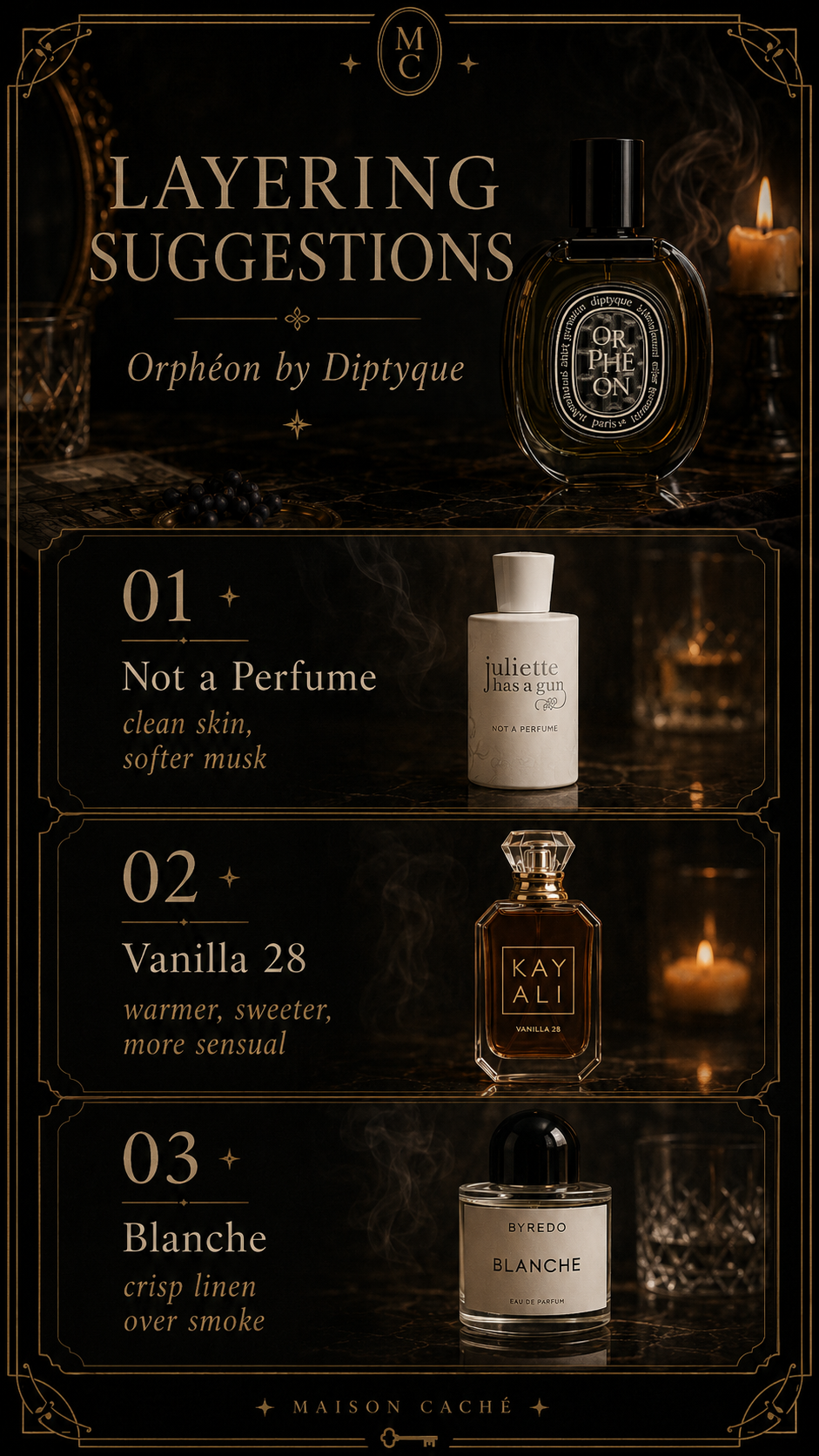
Three ways to change the room
With Not a Perfume — clean skin, softer musk
This strips away some of Orphéon’s vintage density and brings it closer to the body. Quieter, cleaner, almost private.
With Vanilla 28 — warmer, sweeter, more sensual
The tonka opens into brown sugar and ambered vanilla. The jazz bar becomes later, darker and much less innocent.
With Blanche — crisp linen over smoke
Aldehydic cleanliness cuts through the cedar and powder. It feels like opening a window after a long night without erasing what happened in the room.
What it leaves behind
Orphéon is not escapism in the obvious sense. It does not need to convince you that you are in Paris. Its real trick is smaller and stranger: it makes the current moment feel already worth remembering.
A perfume can retrieve a past—but it can also mark a present. Worn through the same season, the same ritual, the same slow return to yourself, it becomes part of the archive the body is quietly building.
Maybe months from now, Orphéon will not smell like a jazz bar at all.
Maybe it will smell like the version of you who finally learned how to lower the lights.